Low-light houseplants for apartments: what actually survives (and what doesn't)
This post may contain affiliate links. If you buy through them we may earn a small commission at no extra cost to you. Read our disclosure.
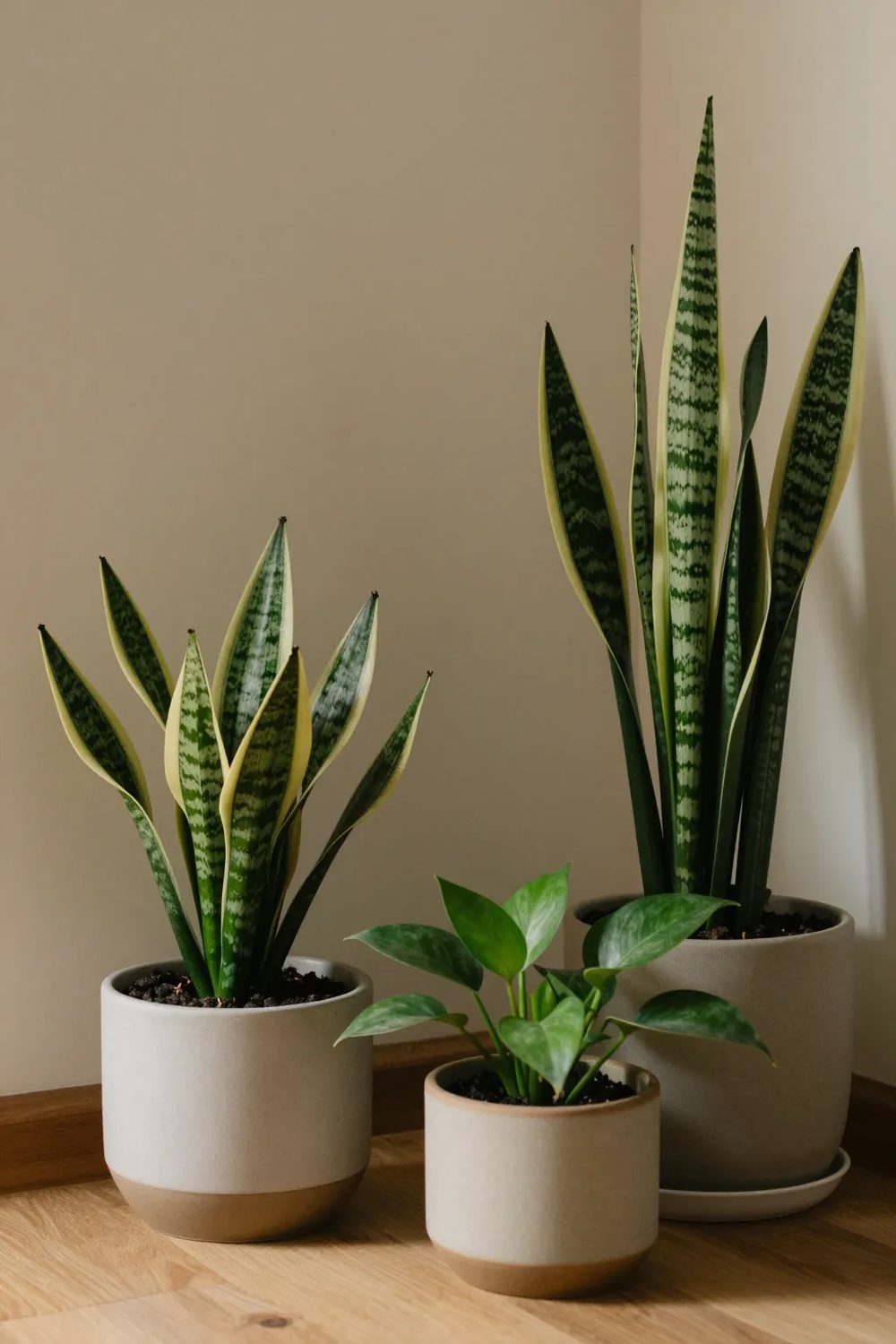
If your apartment has small windows, faces north, or looks straight at the building next door, you’ve probably killed a plant with a “low light” tag on it. Maybe two. It’s not entirely your fault. That label might be the most misleading phrase in the whole houseplant aisle.
“Low light” doesn’t mean what the tag implies
No plant needs low light. Some plants put up with it better than others. They’ll survive in a dim spot, but they’ll usually grow slowly and look a bit sparser than they would somewhere brighter. Go in expecting “alive and fine,” not “jungle.”
Roughly, for the Northern Hemisphere:
- Bright direct is sun hitting the plant for hours, usually right in a south- or west-facing window.
- Bright indirect is a bright room where the plant sees lots of sky but isn’t in the sun’s path.
- Medium is a few feet back from a bright window, or near an east-facing one.
- Low is far from windows, or near a small north-facing one. You can read during the day without a lamp, but no sun ever lands there.
A quick test. At midday, hold your hand about a foot above where the plant will go. A crisp shadow means bright light. A soft, fuzzy one means medium. Barely any shadow means low. If you can’t read there comfortably without a lamp, it’s too dark for most plants, full stop. Free light meter apps give a rough number too, if you like numbers.
The tough ones
ZZ plant (Zamioculcas zamiifolia). Glossy upright stems and thick roots that store water. Handles low light and forgetful owners well, though it grows slowly in the dark. Water only when the soil is completely dry. Overwatering is how almost everyone kills these. Toxic to cats and dogs if chewed (it contains calcium oxalate crystals).
Snake plant (Dracaena trifasciata, formerly Sansevieria). Stiff upright leaves, absurdly drought-tolerant, fine across a wide range of light. Water sparingly and let the soil dry out fully, especially in winter. The ASPCA lists it as toxic to cats and dogs.
Pothos (Epipremnum aureum). Fast trailing vine, great on a shelf or in a hanging pot. Plain green ones cope with low light better than the heavily variegated kinds, which can lose their markings in the dark. Water when the top inch or two is dry. Toxic to cats and dogs.
Heartleaf philodendron (Philodendron hederaceum). Like pothos, but with softer heart-shaped leaves. Very forgiving. Water when the top inch is dry. Toxic to cats and dogs.
Cast iron plant (Aspidistra elatior). Named for being basically unkillable. Low light, temperature swings, some neglect, fine. Slow. Water when the top inch or two is dry. The ASPCA lists it as non-toxic to cats and dogs.
Parlor palm (Chamaedorea elegans). Small, pretty, a classic indoor palm for generations, and it takes lower light than most palms. Keep the soil lightly moist, not soggy. ASPCA lists it as non-toxic to cats and dogs.
Chinese evergreen (Aglaonema). Patterned leaves in green, silver, pink or red. The darker green ones handle low light better than the bright pink ones (the pink ones are the pretty ones, naturally). Water when the top inch is dry. Toxic to cats and dogs.
Peace lily (Spathiphyllum). Dark leaves, white flowers. Tolerates lower light but flowers less in it. It droops dramatically when thirsty, which is actually handy since it tells you exactly when to water. Toxic to cats and dogs.
If you have pets
Check every plant against the ASPCA’s toxic and non-toxic plant list. Lower-light options listed there as non-toxic include cast iron plant, parlor palm, spider plant (prefers medium light but copes with less), Boston fern (wants humidity and medium light), and calatheas or prayer plants (medium indirect light and humidity, and a bit fussy, honestly).
“Non-toxic” doesn’t mean your cat should eat it. Some animals still get an upset stomach. These are just much safer bets.
Watering is where low-light plants die
In low light, plants drink less and the soil stays wet much longer. Most low-light plant deaths come down to overwatering and the root rot that follows. Loving it to death, basically.
So check first. Push a finger into the soil, and if it’s still damp, walk away. Use pots with drainage holes. If you love a decorative pot without one, keep the plant in its plastic nursery pot inside it and tip out any water that collects. Water less in winter. When you do water, water thoroughly, let it drain, then wait until it’s dry to the right depth again.
Small stuff that helps
Turn plants every few weeks so all sides get some light. Wipe dusty leaves with a damp cloth, since dust blocks light. Feed lightly, half strength during the growing season and nothing in winter, because slow growers don’t need much. And watch for the signs of too little light, which are long stretched stems, smaller new leaves, leaning hard toward the window, and variegation fading.
The ones that usually struggle
These get sold as “easy” all the time but generally want more light than a dim apartment gives:
- Fiddle-leaf fig. Wants bright indirect light and sulks at any change. Skip it if your place is dark. Seriously.
- Most succulents and cacti. They stretch and get weak in dim light.
- Herbs like basil and rosemary.
- Heavy bloomers, like many orchids and African violets, generally need at least medium light to flower.
Grow lights
If you want plants in a properly dark spot, like an interior bathroom, a hallway, or a room with no window, get a grow light. LED grow bulbs fit regular lamp sockets. Clip-on ones with bendy necks are good for shelves, and strips can go under shelves. Put it on a timer so it runs the same hours every day. Many indoor growers use roughly 12 to 14 hours for foliage plants, but check the product’s guidance. And the newer full-spectrum LEDs come in warm white, so your living room doesn’t have to glow purple.
Buying
Buy smaller plants. They adjust to new conditions more easily, and in low light a big plant isn’t going to fill out much more anyway. Expect a few leaves to drop in the first weeks, since plants grown in bright greenhouses often shed a bit when they move somewhere dimmer. That’s normal. Check under the leaves and where the stems meet the soil for pests before you bring anything home. And don’t repot right away. Give it a few weeks.
If you only buy one plant, make it a ZZ or a snake plant and then mostly leave it alone. (If you have pets, go cast iron plant or parlor palm instead.)