Reading nook ideas for small spaces (even if you only have a corner)
This post may contain affiliate links. If you buy through them we may earn a small commission at no extra cost to you. Read our disclosure.
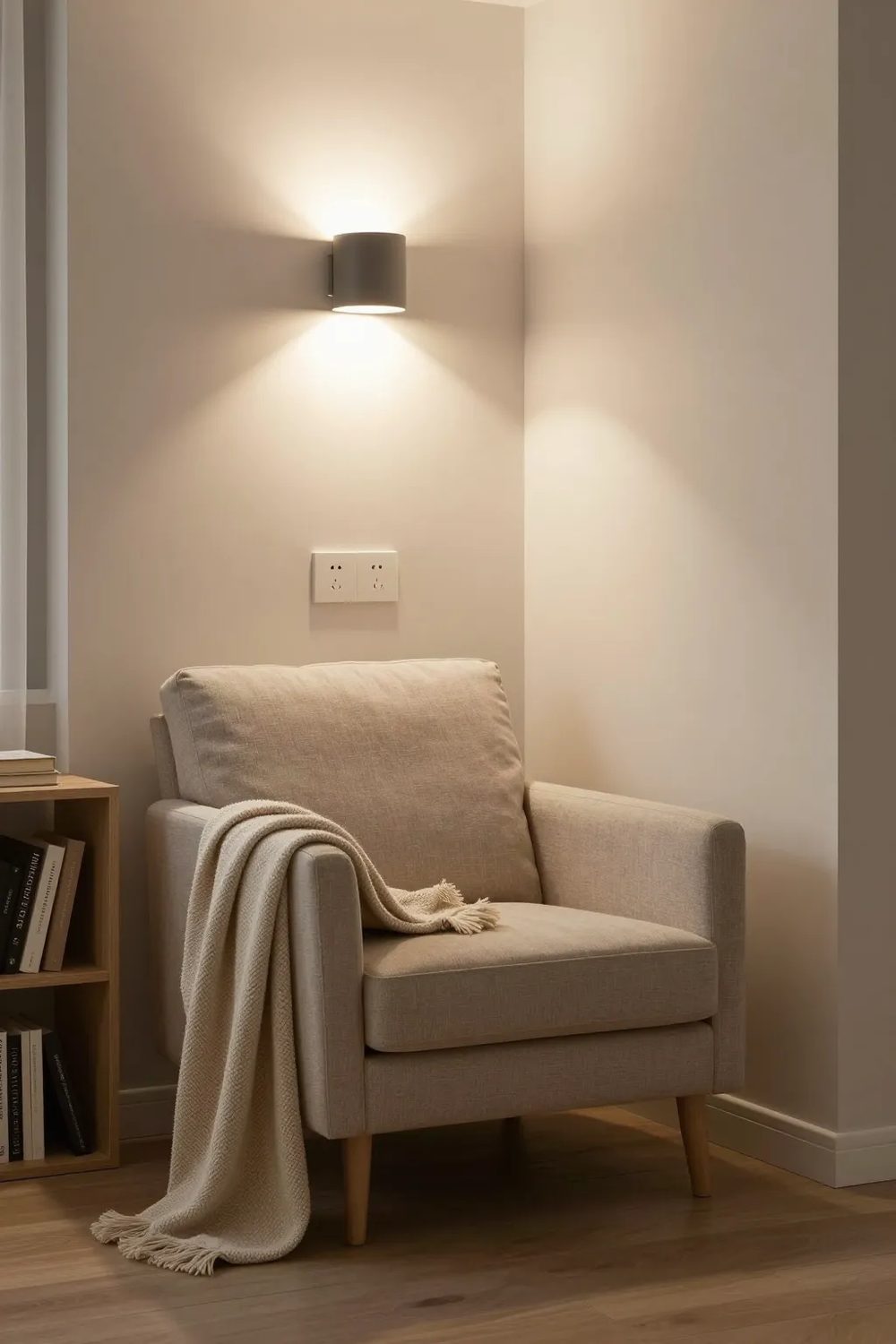
A reading nook is one of the rare home projects where small is a plus. A nook is supposed to feel tucked in. You’re not building a library. You’re making one spot you actually want to sit in for an hour.
(Apparently a lot of people want one right now. Pinterest’s 2026 spring trend report listed “reading nook ideas” and “comfy reading chair small spaces” among its fast-rising home searches.)
It’s really only four things
A seat you can stay in. Light coming from beside you or a little behind. Somewhere to put a mug. And something that makes the spot feel separate from the rest of the room.
Get those right and the nook gets used. Everything else is decoration, and decoration is optional.
Pick the spot
Walk around and look for space nobody uses. A living room or bedroom corner, ideally near a window. The gap beside a bookcase you already own. A deep windowsill. A shallow closet you don’t really need. The end of a hallway, if a chair fits.
Natural light is nice for daytime, but don’t write off a dark corner. That’s what lamps are for. The thing that actually matters is that the spot isn’t in a walkway. A chair people squeeze past is not relaxing, no matter how cute it is.
The chair (where most people go wrong)
Usually the mistake is buying too big, or too upright.
If you like sitting up with feet on the floor, a seat depth of roughly 20 to 22 inches is comfortable. Curlers-up (legs tucked under, the whole thing) want deeper. A higher back saves your neck. Narrow arms save floor space. A swivel base is nice if the nook sits between two zones and you want to turn toward the window sometimes.
No room for an armchair? A big floor cushion with a fat pillow against the wall works. So does a cushioned bench under a window, or a small daybed if the nook doubles as a guest spot.
Add a footstool if it fits. Putting your feet up changes how long you’ll stay more than you’d expect.
Light it properly
Reading in bad light is tiring, so don’t skip this part.
Put the light to the side or just behind your shoulder. If you can, put it on the opposite side from the hand that turns pages, so your hand isn’t throwing a shadow on the book.
Plug-in wall sconces are basically made for renters. A couple of screws (some models use adhesive or a picture-hanging system), then they plug into a nearby outlet. Many come with a cord cover you can paint to match the wall. A swing-arm floor lamp is the other good option because you can aim it exactly where you need it.
Warm white bulbs (around 2700 to 3000K) feel cozy. If you read a lot at night and that feels dim, try a slightly cooler neutral white at a higher brightness. A second softer light, like fairy lights or a tiny table lamp, makes the corner inviting even when you’re not reading.
Somewhere for the tea
A C-shaped side table slides under the chair so the top sits over your lap. Very good for tight spaces. Otherwise a small round table about arm height, a floating shelf on the wall, or a clip-on tray if your chair has wide flat arms.
Make it feel like a nook, not a chair in a corner
This is the difference.
A rug under the chair defines the zone, even a small round one. A curtain on a ceiling track or a tension rod across an alcove lets you close it off. A bookshelf set at a right angle to the wall makes a partial wall. A tall plant beside the chair softens the edge. Art or a removable wallpaper panel behind the chair marks it as its own place.
You don’t need all of these. One or two.
Books
The nook does not need to hold your whole library. A small shelf or a basket with your current to-read pile is plenty. A narrow bookcase or ladder shelf keeps books close without crowding the chair.
A few versions
The living room corner. Armchair angled in the corner, floor lamp behind it, small rug under it, tall plant on the other side. The simplest version and it works almost anywhere.
The window seat you didn’t build. Deep window recess? A custom-cut foam cushion and some pillows turn it into a seat. No recess? A low storage bench under the window with a cushion on top gives you the window-seat feel plus blanket storage.
The closet nook. My favorite, honestly. Take the doors off a shallow reach-in closet (store them carefully and put them back before you move out), put a thick cushion or a twin mattress topper on the floor, add pillows, a plug-in sconce or battery lights, and a small shelf. A curtain on a tension rod across the opening adds privacy. Kids love these. So do adults, judging by Pinterest’s trend report, which mentioned rising interest in “closet reading nook for adults.” Before you do it, make sure there’s airflow and no exposed wiring, and use LED bulbs so nothing gets hot.
The bedroom corner. Small chair, sconce, side table. Reading in a chair instead of in bed also helps keep the bed for sleeping, if that’s something you’re working on.
The balcony. In warm months, a weather-resistant chair, outdoor cushions and a lantern. Bring the textiles in when it rains, or they’ll get musty fast.
Textiles
A knit or waffle throw over the arm. One or two pillows for your lower back. Something soft underfoot. Linen or cotton curtains. Keep the palette small, maybe two or three colors, so it feels calm instead of busy.
Doing it on basically nothing
Move a chair you already own to a better spot. Check secondhand marketplaces for armchairs (you don’t need to reupholster if you throw a blanket over it). Swap a harsh overhead bulb for a warm lamp. Honestly, a rug, a lamp and a stack of books on the floor is a nook. Start there and see if you even use it before buying a chair.