How to make a small living room look bigger (layout and decor tricks that work)
This post may contain affiliate links. If you buy through them we may earn a small commission at no extra cost to you. Read our disclosure.
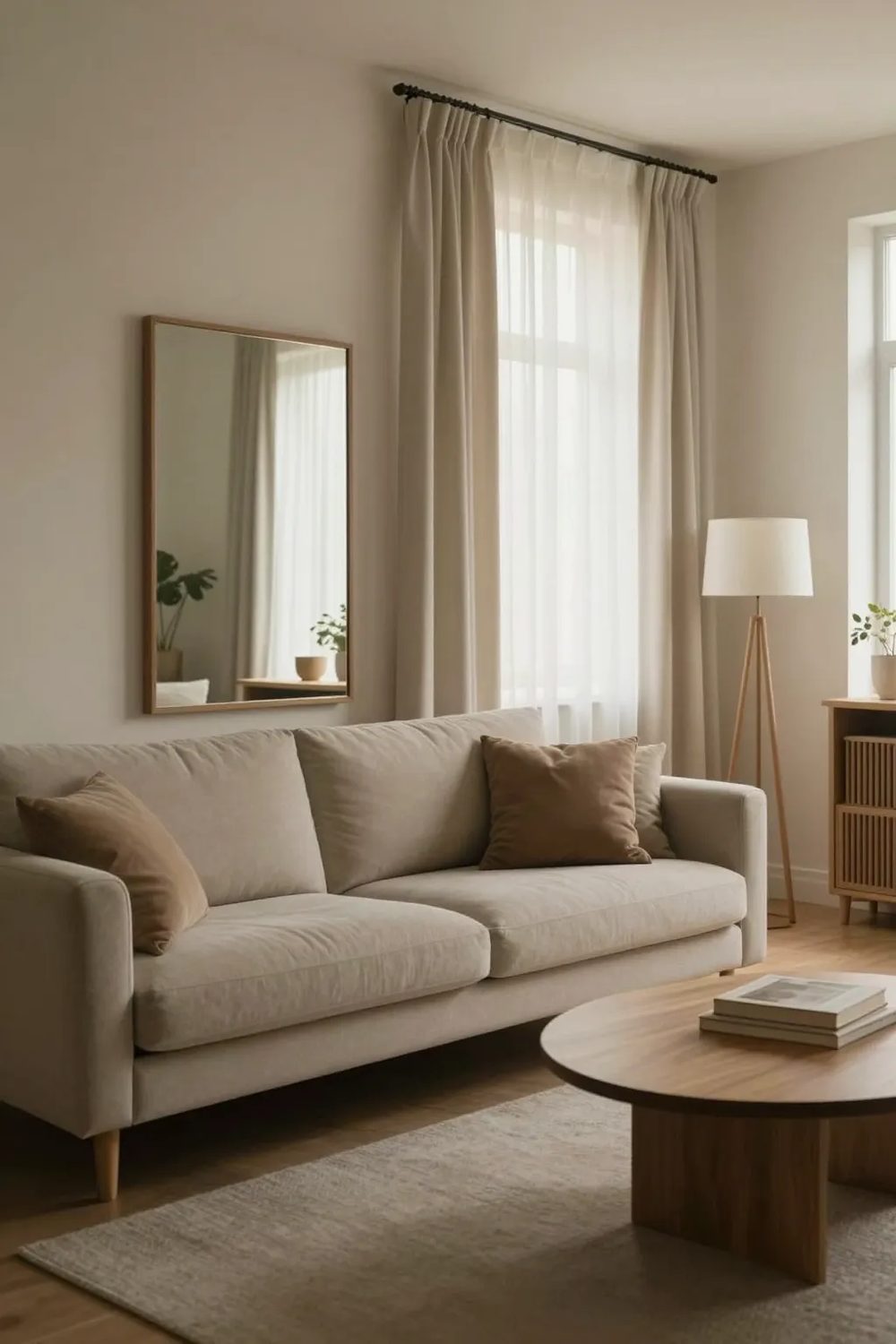
Here’s the slightly annoying truth. Most small living rooms don’t feel cramped because they’re small. They feel cramped because the furniture is the wrong size, the rug is too little, and there’s one light on the ceiling doing all the work.
Which is good news, actually. Almost all of that is fixable without a renovation, and a fair bit of it is free.
Measure before you buy anything
Grab graph paper or a free online room planner and sketch the room. Doors, windows, radiators, outlets, and the path people walk to get through it.
Two numbers matter more than the rest. A main walkway feels comfortable at roughly 30 to 36 inches wide. Squeeze it narrower and the room feels crowded no matter how nice your stuff is. And the gap between sofa and coffee table works at about 14 to 18 inches, close enough to reach your drink and far enough that you’re not bruising your shins.
If your current setup pinches either one, start there. It costs nothing.
Get the sofa off the wall
I know. Everyone’s instinct is to shove every piece against the walls to “open up” the middle. What you usually get is a big empty center, chairs that are too far apart to talk across, and furniture that looks like it’s waiting for a bus.
Try pulling the sofa a few inches off the wall. In a longer room, float it so there’s a walkway behind it and a tight seating area in front. A grouped, deliberate layout looks designed. A designed room reads as roomier. Weird but true.
Furniture with legs
Visual weight matters about as much as actual size. A sofa on raised legs lets you see floor underneath it, and the room looks more open for it. Thin track arms give you more seat in the same footprint than big rolled arms. Glass or acrylic coffee tables and cane-back chairs take up space without blocking the view.
And honestly? One properly sized sofa plus one chair beats a sofa, a loveseat and an ottoman wedged in together. Every time.
Your rug is probably too small
This might be the most common small-room mistake there is. A little rug floating in the middle of the floor chops the room into bits.
The rule I’d use is that the front legs of every main seat sit on the rug. In a lot of small living rooms that means 5x8 or 6x9, not 4x6. If budget’s the issue, a flat-weave or natural-fiber rug in the bigger size often costs less than a plush one in the smaller size.
Hang the curtains high and wide
The closest thing to a magic trick in small-space decorating.
Mount the rod near the ceiling, or at least several inches above the window frame, so your eye goes up. Run it past the frame on each side so the curtains stack against the wall when open. You see more glass, and the window looks bigger. Then get curtains long enough to just kiss the floor. Short curtains look like they shrank in the wash.
Can’t drill? Tension rods work inside a window recess, and there are no-drill brackets that clip onto the window frame. If you do put up regular brackets, ask first and patch the holes before you leave.
Mirrors, but put them somewhere useful
A big mirror makes a small room feel deeper and brighter, mostly when it reflects a window or a lamp. A floor mirror leaned against the wall needs zero installation (add an anti-tip strap if you’ve got kids or pets).
Don’t hang it facing a blank wall or the clutter corner. It just doubles whatever it sees.
Color
You don’t need an all-white room. Very stark white can actually make a dim room look flat and gray.
What helps more is keeping things connected. Pick two or three main colors and repeat them across the sofa, rug, pillows and art. Keep the big pieces close in tone to the walls so they blend in. Put the loud color in small, movable stuff like pillows, a throw, a vase.
If your lease lets you paint, a soft warm neutral often feels bigger than bright white. If it doesn’t, one large piece of art can change the whole wall.
More lamps (seriously, more)
One overhead light flattens everything and leaves dark corners. Dark corners make rooms look smaller. Aim for light at a few heights. The ceiling light or a bright floor lamp for general light, a reading lamp by the sofa, and something low and soft like a table lamp on a shelf.
Put a lamp in the darkest corner first. That alone changes how the room feels at night. Plug-in sconces are great if your side tables are tiny.
Go up the walls
Tall, narrow bookcases use height instead of floor. Hang art a little higher than feels normal and the ceiling seems taller. A leaning ladder shelf adds storage without eating floor area. Then edit. Shelves crammed edge to edge look busy, so leave some gaps and mix books with a couple of objects.
Multi-purpose furniture, but only if you’ll use both jobs
Storage ottomans work as seats, footrests and blanket storage. Nesting tables appear when you need them and tuck away when you don’t. Lift-top coffee tables are decent laptop desks.
Sleeper sofas are where I’d push back a bit. If you host overnight guests a lot, sure. If not, the regular sofa you actually like sitting on wins, and the fold-out mechanism is usually what makes sleepers uncomfortable.
Hide the mess and the cables
Closed storage low, open storage high. Baskets and cabinets near the floor hide daily junk. Open shelves up top hold the stuff you like looking at.
Cables are sneaky. Adhesive cord channels painted the wall color, a cable box behind the TV stand, a few velcro ties. It makes a surprising difference for very little money.
Things that make small rooms look smaller
A sofa too deep for the room. A tiny rug. Curtains hung right on top of the frame. Forty little accessories on every surface. One light source. A TV wall jammed with mismatched furniture. (Most of us have done at least three of these.)
If you’ve got a free Saturday, do it in this order. Clear the surfaces and floor. Rearrange to open the walkways. Fix the rug. Raise the curtains. Add a lamp to the dark corner. Then a mirror near the window. Almost none of that requires buying a new sofa.