Small bedroom storage ideas that don't require drilling
This post may contain affiliate links. If you buy through them we may earn a small commission at no extra cost to you. Read our disclosure.
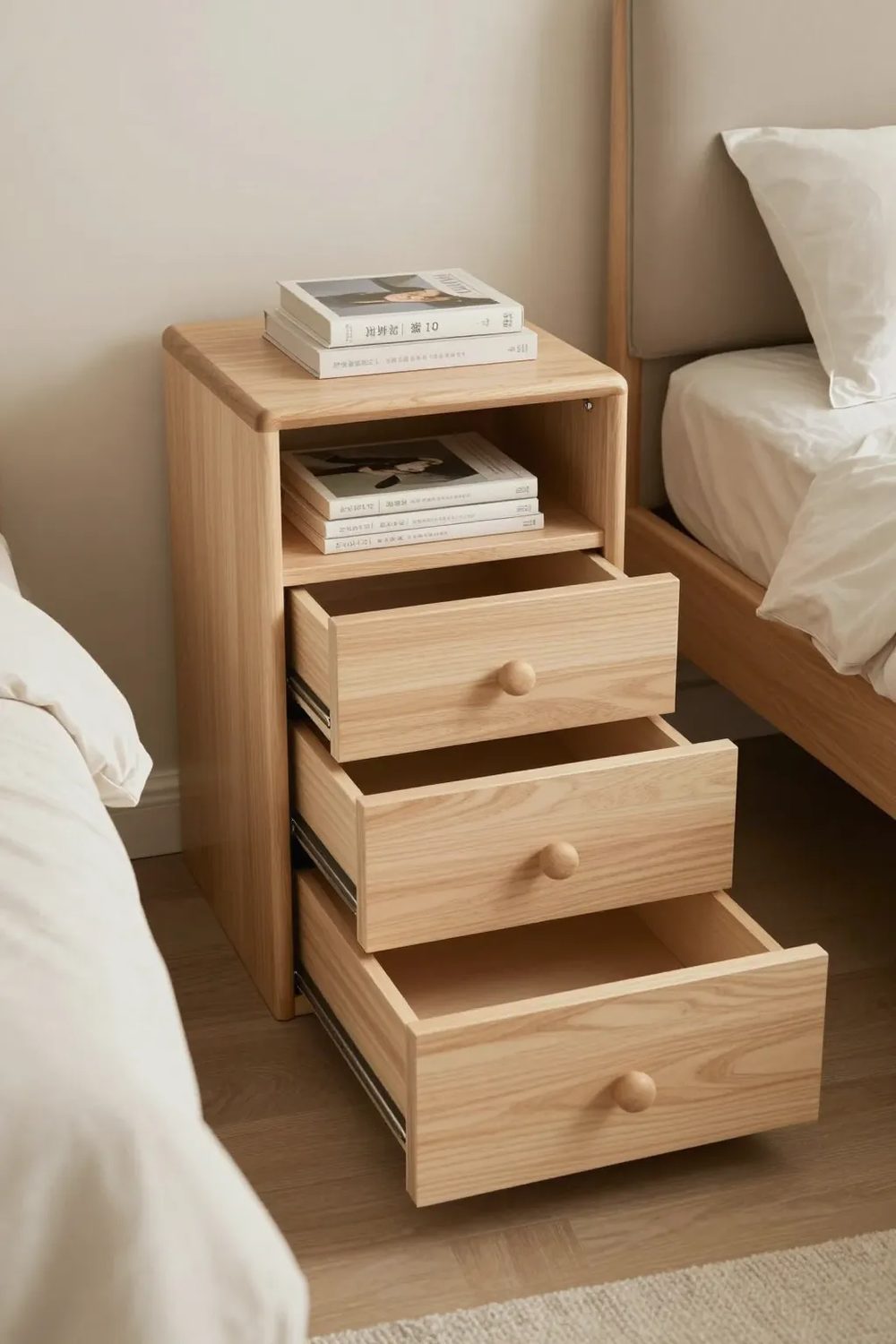
Small bedrooms fill up fast. The bed eats most of the floor, the closet is about half the size it should be, and every flat surface becomes a place for clothes, chargers and the book you’re definitely going to finish. The usual fix is shelves and built-ins. In a rental, usually not allowed.
So this is all stuff that stands on its own, hangs over something, or slides under something. Nothing you can’t carry out the door.
Edit first. I know, I know.
Everybody wants to skip to buying bins. Don’t. Storage works best when you’re only storing what you use, so empty one category at a time (clothes, shoes, bags, bedding) and sort it into keep, donate, and “why is this in my bedroom.” It’s pretty common to find a chunk of it belongs in a hall closet, a box, or someone else’s home.
Then measure. Under the bed, inside the closet, the back of the door, any blank wall.
Under the bed
Usually the biggest unused space in the room.
Low lidded bins or zippered fabric bags slide under most beds. Measure the clearance first. A lot of frames sit somewhere around 6 to 12 inches off the floor, but it varies a lot. Wheels make bins easier to pull out, and clear lids save you from opening every single one. Good for off-season clothes, spare sheets, shoes, wrapping paper.
Bed too low? Furniture risers lift it a few inches and can add a lot of space. Get sturdy ones made for beds, and make sure your frame’s legs actually sit securely in the cups. Wobbly risers are a bad idea.
If you’re buying a bed anyway, look at ones with drawers or a lift-up platform. Drawers are easy for daily stuff but need room to open. Lift-up beds hold more but are annoying for anything you need every day.
Up, not out
A tall, narrow dresser often holds as much as a low wide one in a smaller footprint. Floor space is the expensive part of a small room. Wall height is basically free.
One serious note. Tall furniture can tip, especially with drawers pulled out or a kid climbing it. Anti-tip kits usually attach the furniture to the wall with one screw. Most landlords will OK that because it’s a safety thing, so ask and patch the hole when you leave. If there are kids in the home, don’t skip it.
Leaning ladder shelves need no fixings at all (many come with an optional anti-tip strap). Books, folded sweaters, baskets, a plant. Freestanding shelving units with fabric bins hold a ton, and the bins hide the mess.
The back of the door
Free storage nobody uses.
Over-the-door shoe organizers with clear pockets aren’t only for shoes. Scarves, socks, accessories, toiletries. Hook racks that slip over the top hold robes, bags, tomorrow’s outfit. Some over-the-door mirrors open up to jewelry storage behind them, which is a nice two-for-one.
Check the door still closes with the hooks on it. Some doors have barely any gap at the top.
The closet
Most rental closets are one rod and one shelf. You can get a lot more out of that without touching the walls.
A double-hang rod hangs off the existing rod on straps and gives you two levels for shirts and folded pants. Slim matching non-slip hangers take way less room than chunky plastic or wooden ones (this one change is weirdly satisfying). Fabric hanging shelves hold sweaters and jeans. Stackable drawers on the closet floor. Clip-on shelf dividers so your sweater pile stops sliding over. Or a modular freestanding closet system that just stands inside without attaching to anything.
No closet? Clothing rack.
A freestanding rack works as an open wardrobe, but it can go messy fast. Keep it to current-season clothes, use matching hangers, sort by color or type, and put a basket or shelf underneath for shoes and bags. Some come with covers if you’d rather not look at your clothes all day.
Furniture that does more
Nightstands with drawers instead of open tables. A storage bench at the foot of the bed for blankets, which is also where you sit to put shoes on. Some freestanding headboards have shelves or cubbies and attach to the bed frame, not the wall. A desk that doubles as a vanity if you need both.
Baskets catch everything that would otherwise end up on the floor. Laundry, blankets, chargers. Use the same style throughout so it looks planned, and label the ones on shelves.
Specific annoying problems
The nightstand is always a disaster. Get one with a drawer or closed cabinet so the chargers and hand cream have somewhere to live. No room for a table at all? A bedside caddy that tucks between mattress and frame holds a phone, glasses and a book.
The chair pile. You know the one. It’s usually clothes you’ve worn once and plan to wear again. Give them an official spot, like a couple of over-the-door hooks, a valet stand, a small basket. Once half-clean clothes have a home, the chair is a chair again.
Laundry. A tall slim hamper fits in a corner or on the closet floor. Two-compartment ones let you sort lights and darks as you go.
Bedding hogging the shelf. Fold each spare sheet set and store it inside one of its own pillowcases. The whole set stays together and takes less space. Vacuum bags shrink bulky duvets, but they’re best for things you won’t touch for months since they can crease natural fibers.
No room for a dresser. Closet drawer units, hanging shelves on the rod, and one under-bed drawer can replace a dresser in a lot of small rooms. Not glamorous. Works.
Mistakes
Buying storage before editing (then you’re just storing junk neatly). Low, wide furniture in a narrow room. Too many open shelves, which look cluttered within a week. Ignoring the door.
If you want a weekend plan, edit on Friday night, measure Saturday morning, buy bins and slim hangers and a door organizer Saturday afternoon, and redo the closet Sunday. The only hole you should leave behind is the one for the dresser anchor.